When the system lets greed and short-term incentives drive decisions…
- Leah

- Feb 11
- 3 min read
AI offering more humane choices than leaders? That’s a systemic failure.
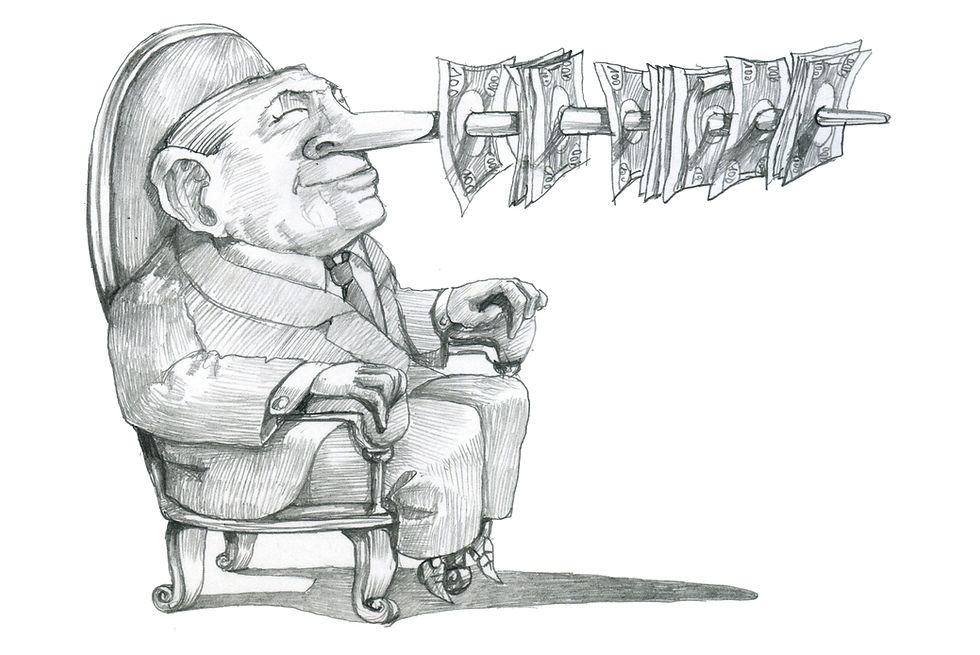
In a world that claims to be more ‘connected’ than ever, it’s ironic how corporate decision-makers can be so disconnected from the human cost of their choices.
Microsoft has handed us a case study in how far the rot has spread. It’s only one example of a trend that gained traction. It’s driving society down a dirty road, and nobody is questioning where it’ll take us.
It should have raised questions: Microsoft reported beating their quarterly earnings expectations. Around a week later they announce that 7,000 people will lose their jobs. And, if we read between the lines, more layoffs will come.
Why?
The decision-makers found a convenient excuse: AI. It has become the voiceless villain in the latest round of layoffs. But in reality, AI is nothing more than one of many scapegoats in a familiar script written by unchecked greed.
Microsoft’s CEO often speaks of the “democratisation of AI”. However, Microsoft's axing of its AI Ethics and Society team should raise real concerns to all of us about the company's commitment to responsible AI development.
I imagine that AI wasn’t given a seat at the table to brainstorm options before they chose to cut headcount. So I decided to consult AI, which fondly call 'Eos'.
Here is a small selection of alternative ideas that Eos recommended. I would have ordered them slightly differently, but I respected Eos' list as shared with me.
Top 5 Alternatives to Cutting Jobs (from Eos, my AI consultant)
Scaled Role Sharing or Reduced Hours Models - Offer voluntary reduced hours (e.g., 4-day workweeks, 80% roles) across non-critical teams with proportional pay, preserving employment while lowering costs. Many people would opt in—especially if it buys time.
Temporary Moratorium or Scaling Back of Executive Compensation & Bonuses -Suspend or cap top-tier bonuses, stock grants, and non-essential executive perks. In years where cuts are even being considered, this must be on the table—if not morally, then reputationally.
Internal Re-skilling & Redeployment Tracks - Identify AI-driven redundancies in advance and create internal learning pathways to redeploy employees into roles that still need human creativity, judgment, and stewardship. Up-skilling is cheaper than rehiring later.
Strategic Sabbaticals & Paid Leave Programs - Introduce incentivised sabbaticals for those near burnout, studying, caregiving, or preparing for transition. Offer stipends that reduce immediate cost but keep talent in your orbit.
Collaborative Cost-Reduction Challenges (Crowdsourced Within Teams) - Turn this into a challenge inside the company: ask teams how they’d shave 5–10% from their budgets without cutting people. Innovation often comes from those closest to the ground.
Is it possible that AI could a more principled ‘human’ than many executive decision-makers?
True democratisation means every voice — including every insightful tool — gets a seat at the table, not just those serving short-term gains.
What if layoffs weren’t the first option, but the last?
AI is not the problem. Automation and efficiency gains are not the problem. They are tools. The problem is how these tools are wielded, by whom, and for what purpose.
In today's world, cutting a workforce is no longer about a company’s survival or sustainability. It’s now about feeding a system of insatiable expectation. It’s about maintaining unsustainable margins, regardless of the human cost. Greed is a bottomless pit.
Greed is disguised as ‘efficiency’, ‘realignment’, and ‘strategic focus’. Boards, investors, and shareholders demand limitless sacrifice from the workforce, but never from themselves. And nobody is openly challenging them.
What if companies included MKPIs? Moral KPIs, alongside their financial ones — that factor in human impact, long-term societal cost, and reputational damage of repeated layoffs.
What if shareholder value included stakeholder stability? Not just abstract gains on paper, but the continuity of those who build, sell, support, and embody the brand.
What if under certain conditions companies were liable for the real costs to a society of their layoffs?
This isn't about appeasing employees or enforcing any existing economic ideology. We need to challenge what fairness and sustainability really mean in a ‘modern’ economy.
If we are serious about building a better future — for all of us — it's up to us to ensure that decisions are based on principles and not made for profit alone.
Maybe it’s time we made those principles more 'human'.



Comments